
Industry insightPublished: · By MorZan
IP21, IP54 or IP65: Choosing the Right VFD Enclosure
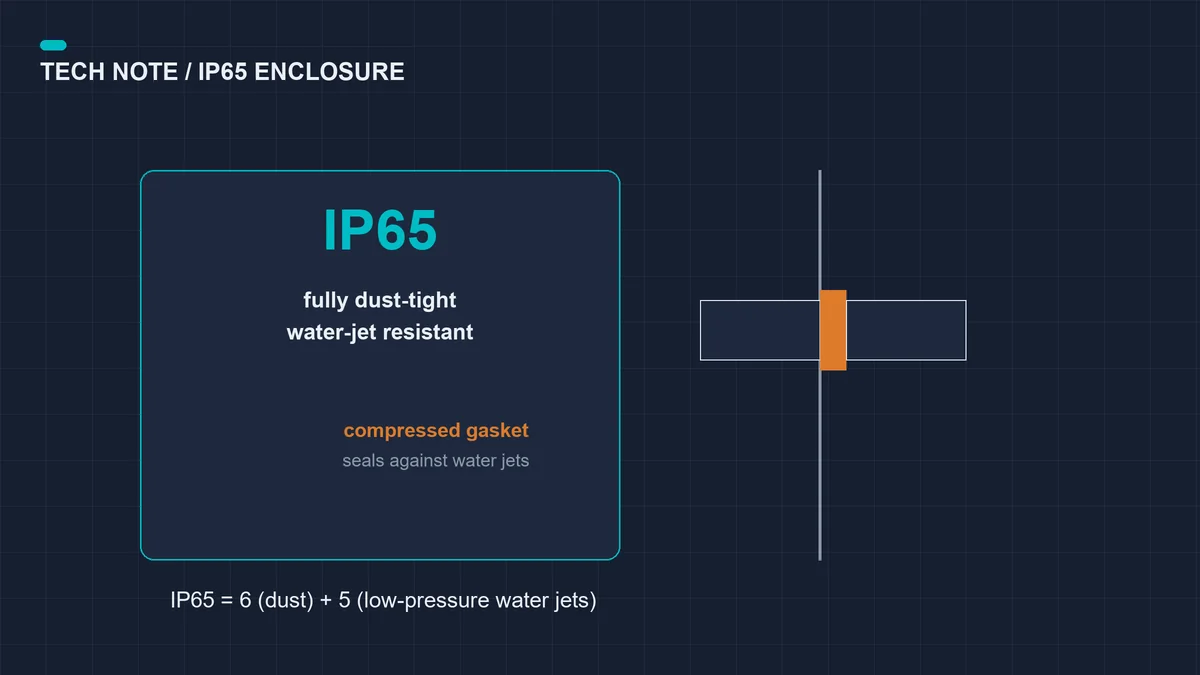
Ingress protection is not a quality grade. It describes what can enter the enclosure: dust, water and fingers. IP21 protects against solid objects above 12.5 mm and vertical dripping water, which covers a variable frequency drive (VFD) in a clean electrical room. IP54 adds dust protection and splash resistance from any direction. IP65 is dust-tight and resists water jets, so it survives washdown areas and outdoor installation under cover.
The mistake is assuming that a higher IP rating removes the need to think about heat. It does the opposite. A sealed enclosure cannot exchange air with the room, so the drive must reject its losses through the metal surface. That usually means derating the continuous output current, increasing surface area with a larger heatsink, or routing the heatsink outside the sealed volume so the electronics stay dry while the heat escapes.
Choose by the environment, not by the list price. A dusty cement or woodworking plant needs IP54 at minimum even indoors, because filament filters will clog and turn an IP21 drive into an overheating fault within months. A food plant washing equipment down needs IP65 and stainless hardware. An air-conditioned control room is a legitimate IP21 application and will cost less to buy and less to run. If the environment is genuinely wet and hot, a liquid-cooled drive with the electronics sealed and the coolant loop outside the enclosure is often the honest engineering answer rather than a bigger air-cooled box.
VFD Applications
Every variable frequency drive (VFD) application is different, because every load behaves differently. These guides explain the drive features that matter for your industry and link to the recommended product range.
All industry guides