
Project location: Shanxi, China · By MorZan
Replacing Star-Delta Starting on Blast Furnace Conveyors at Shanxi Jinnan Iron & Steel
- Plant / customer:
- Shanxi Jinnan Iron & Steel Group
- Published:
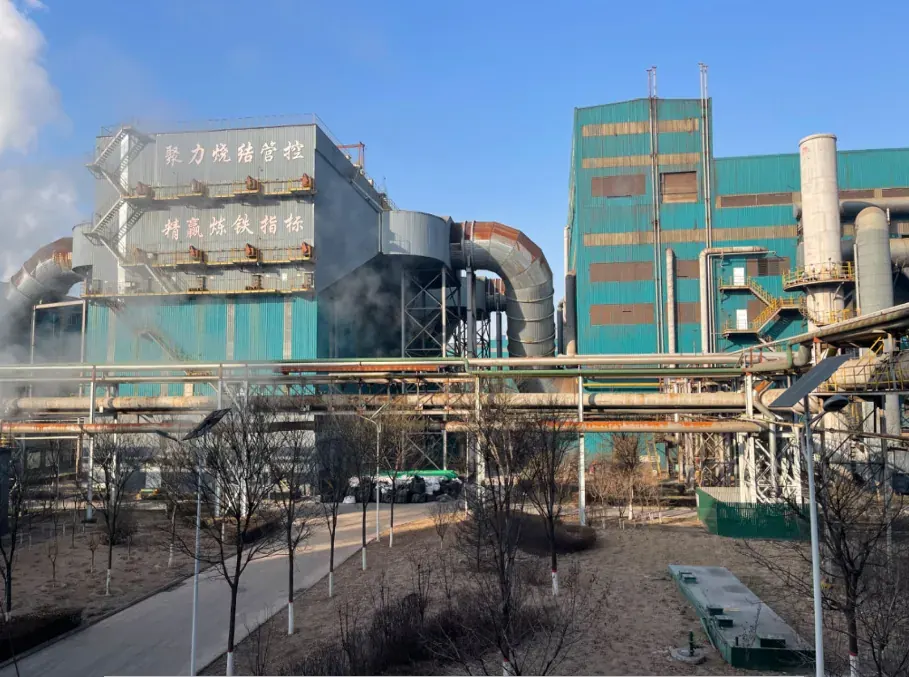
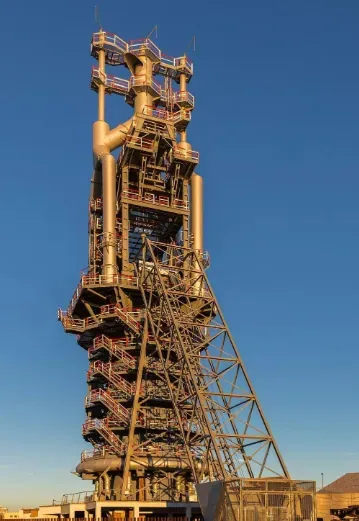
At the Jinnan works, iron ore and coke are carried to the top of the blast furnaces by belt conveyors. Before the retrofit each conveyor was started by a star-delta starter driving a three-phase induction motor, which in turn drove the drum through a gearbox. Star-delta does what it promises: it lowers the starting current compared with a direct-on-line start and softens the shock on the supply.
What it cannot do is change anything after the start. The motor runs at fixed mains frequency for the rest of the shift, so its terminal voltage follows the grid and its magnetising current follows the voltage. A conveyor sized for its worst-case load therefore draws full magnetising current all day, including the hours when the belt is lightly loaded. That is a continuous, avoidable loss, and it grows with the size of the motor.
To support its own carbon-reduction programme the steel group replaced the starters with variable frequency drives. Starting behaviour improves immediately — the drive ramps from zero speed and zero voltage, so inrush is lower again than with star-delta. The larger gain, though, comes from running the motor below mains voltage so that its power factor rises, and from matching belt speed to the material actually on the belt.
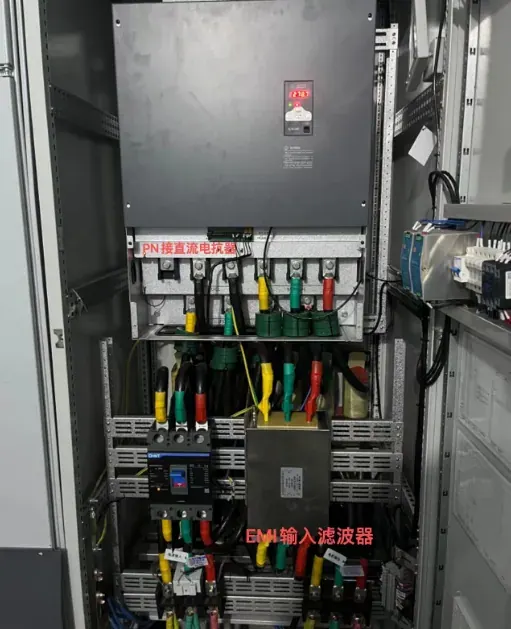
The 160 kW drive, rated 370 A against a motor nameplate of 290 A, was installed with three additional components chosen for this specific duty rather than as catalogue options: an EMI input filter to suppress high-order harmonics and keep the drive from being disturbed by the rest of the plant, a DC reactor on the drive's bus to reduce the ripple factor and smooth current pulsation, and an output reactor between drive and motor, which was necessary because the cable run from the electrical room to the conveyor exceeds 150 m. Together the filter, DC reactor and output reactor also improve the power factor of the whole assembly.
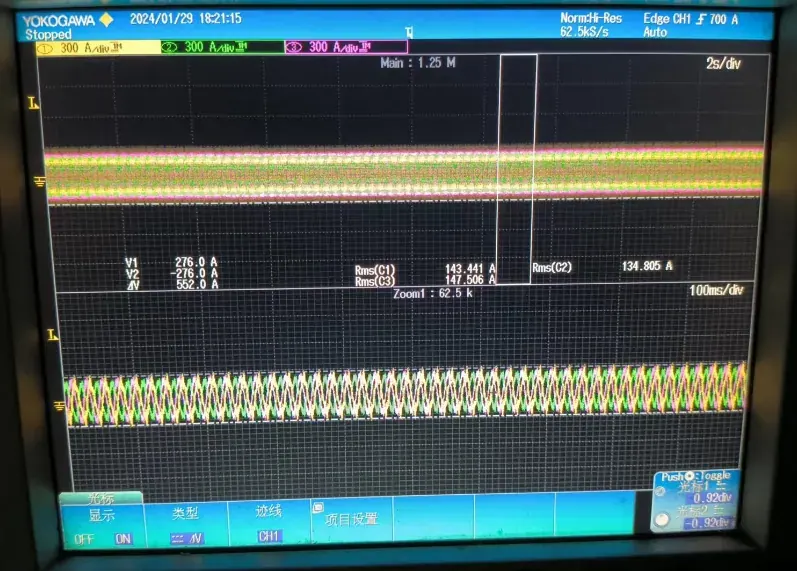
Results were taken from an energy meter fitted upstream of the drive. Under normal working conditions a single 160 kW conveyor consumed about 200 kWh less per 24 hours than it had under star-delta control. The same reasoning applies to the plant's fans and pumps — which are square-law loads where the saving from reducing speed is even larger — and to the remaining conveyors, so the retrofit is being extended across the works.
Project data
- Application
- Blast furnace charging conveyors
- Motor
- 160 kW, 290 A, 1485 rpm
- Drive
- 200 kW frame, 370 A, with EMI filter, DC reactor and output reactor
- Measured saving
- ≈200 kWh per day per 160 kW conveyor
Project photographs
Industry guide for this application
This project sits in the Steelmaking & Metallurgy section. The guide covers the duty profile, the machinery and the selection rules for that industry.
Read the Steelmaking & Metallurgy guide