
Industry selection guide
VFD for Steelmaking & Metallurgy
A steel works runs hundreds of variable frequency drives (VFDs) that all have to survive heat, scale, shock loading and a duty cycle measured in operations per hour. This guide covers the drive decisions that decide whether a mill keeps its throughput.
How this industry uses a drive
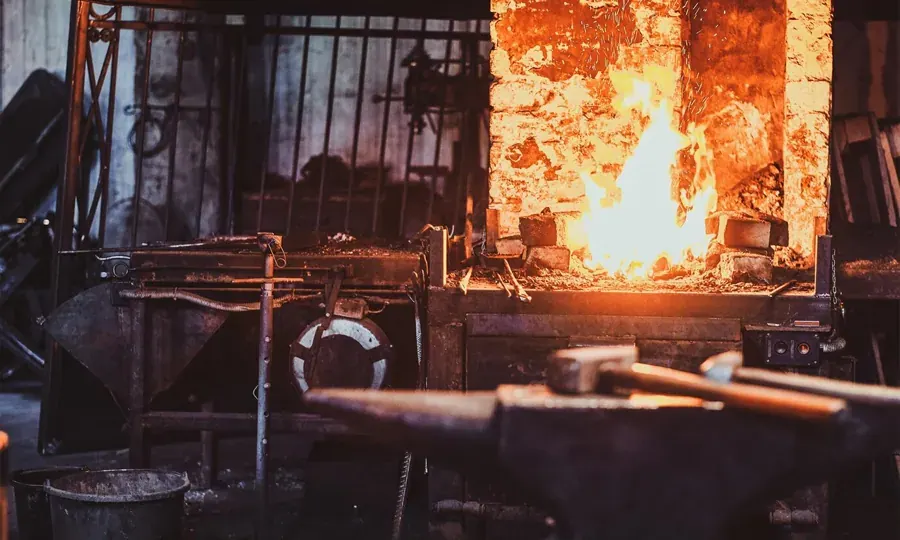
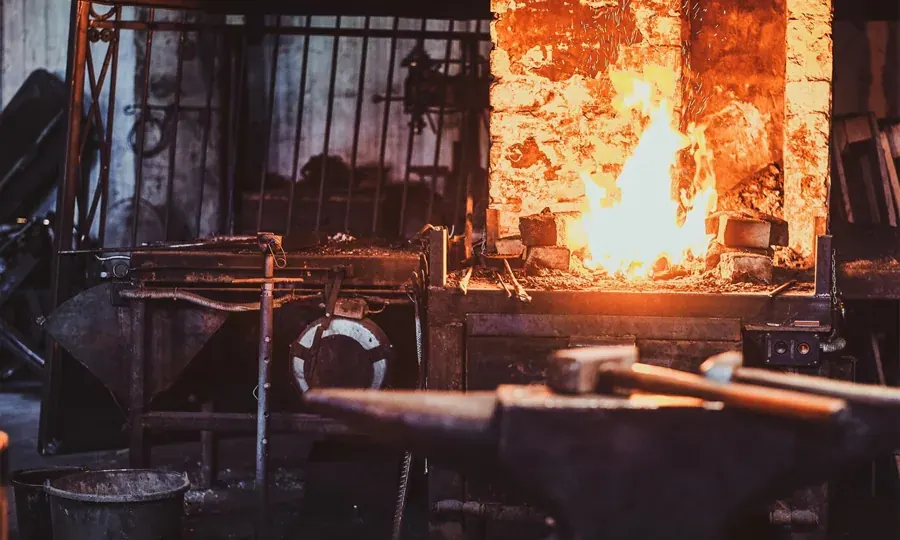
A steel works is a collection of drives that were never designed to be gentle. A converter tilts a hundred tonnes of molten metal and has to hold it steady while oxygen is blown; a rolling mill reverses direction several times a minute at full torque; a conveyor carries sinter at 200 °C. The process data is dense and the equipment moves constantly, so the control system has to be both fast and repeatable.
Modernisation, not greenfield construction, is where most of the opportunity lies. The motors are usually sound and the gearboxes are usually fine; what has aged is the control — direct-on-line starters, throttling valves, constant-speed hydraulic pumps. Replacing that layer with a variable frequency drive cuts energy, removes the shock loading the mechanical train has been absorbing for thirty years, and gives the operator a speed or pressure setpoint where before there was only on or off.

Retrofitting hydraulic power units
Hydraulic power units are the classic retrofitting opportunity in a steel works, and the plate mill is the classic example. A constant-speed pump keeps the system pressure up by pumping through a relief valve whenever the mill is not moving; the oil heats up, the cooler works harder, and the energy that went into raising the pressure is thrown away as heat. Fitting a drive to the pump motor and closing a pressure loop means the pump turns only as fast as the load demands.
The savings are real but they have to be measured, not assumed, because the same drive also changes how the unit behaves. Pressure control in a hydraulic system is a fast loop with a lot of compliance in the oil, so the drive needs a pressure transducer with a short time constant, and the PID has to be tuned on site against the actual accumulator. Overshoot is not just an efficiency loss — in a mill it is a mechanical event.
A second benefit is usually bigger than the energy bill: removing the relief-valve duty also removes most of the oil heating, which extends oil life, reduces cooler load and stops the seasonal alarms that appear every summer. On a unit that runs continuously, that is often the argument that gets the project approved.
Conveyors, fans and dust extraction
A modern steel plant moves more material on belts than it does on rails. Sinter, coke, ore, scale and finished product all travel on conveyors, and most of those belts are driven from a fixed-speed motor through a fluid coupling. Converting them to drives delivers the same breakaway-torque and load-sharing benefits as in mining, and adds the ability to run the belt slowly during a downstream stoppage instead of stopping it completely and having to break it away again.
Dust extraction and combustion fans are square-law loads where speed reduction is the cheapest energy available. A fan at 80 % speed draws roughly half the power of a fan at 100 %, so replacing a damper or an inlet vane with a drive on the fan motor pays back faster than almost anything else in the plant. The complication is thermal: these fans run hot and often on long shafts, and a fan that is already spinning when the drive is told to start needs flying restart, not a fault.
Where the drive governs a fan that serves a safety function, the control scheme has to be designed rather than assumed — the drive must be able to go to a fixed commanded speed regardless of the process loop, and the loop must not be able to override it. That is a control design question, not a drive specification question, and it is worth settling before the order is placed.
Heat, scale and the short-circuit question
Two site conditions separate steel from most other industries. The first is radiant heat: a drive mounted near a furnace or a hot slab sees an ambient well above the figure in its datasheet, and the rating has to be reduced accordingly or the enclosure moved. The second is the fault level. A steel works has a very stiff supply, so a drive with a diode front end contributes more harmonic current than it would on a weak network, and the plant usually has a power quality limit written into its supply contract.
The standard answers are a harmonic filter, a multi-pulse rectifier or an active front end. Choosing between them is a commercial decision once the harmonic limits are known, but the drive frame has to be specified with the chosen option from the start — adding a filter to a drive that was ordered for direct connection is not a field modification.
For reversing duties such as a mill stand or a coiler, regeneration is continuous rather than occasional, which points at a regenerative front end rather than a braking resistor. It returns the braking energy to the network instead of heating a resistor bank, and it holds the DC link steady during frequent reversals, which is what keeps the speed response repeatable between passes.
Machinery typically driven
- Hydraulic power units for mill and coiler
- Reversing mill stand drives
- Belt conveyors for sinter, coke and ore
- Combustion and dust-extraction fans
- Cooling-water circulation pumps
- Roller-table and transfer drives
- Scale and descaler pumps
- Wire-drawing and processing lines
Selection rules to apply
- For a hydraulic power unit, budget a pressure transducer and commissioning time for the PID — the drive alone does not deliver the saving.
- Where the drive reverses more than a few times an hour, specify a regenerative front end instead of a braking chopper and resistor.
- Ask the utility or the plant electrical team for the harmonic limit before choosing the rectifier type, and order the frame with that option.
- Apply radiant-heat derating explicitly, or mount the drive in an air-conditioned or remote cabinet and pay for the cable instead.
- On belts converted from fixed speed, keep the fluid coupling's overload philosophy in mind: the drive now provides it, and its limits must be set to protect the same mechanical parts.
- For any fan with a safety role, agree the control scheme in writing before delivery.
Series to start from
Confirm the rated current against your motor's full-load current before fixing the model; the frame size follows the overload the machine needs, not the motor nameplate alone.
- YD5900
- YDS8000
- YD580
- YD3000N
- YD680
Delivered projects in this industry
2 project records from this industry, with the plant, the motor and the measured result.
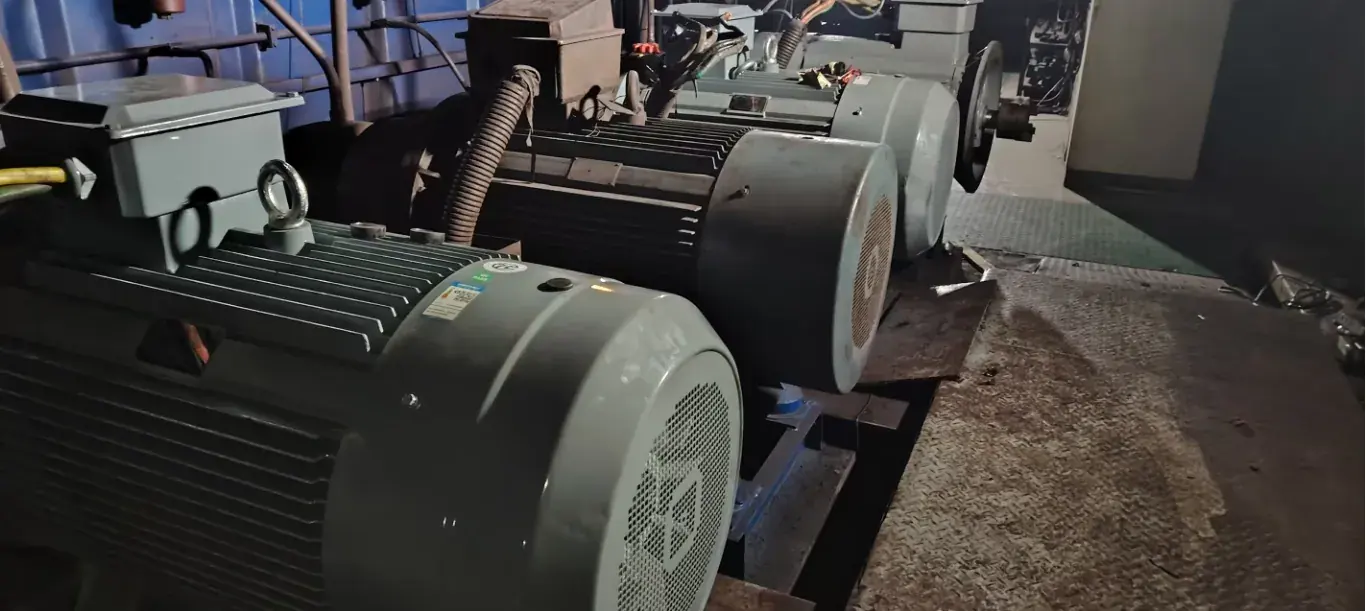 Plate Mill Hydraulic Pumps at Xinjiang Bayi Iron & Steel: Drive Plus PMSM Beats Soft StarterXinjiang, China · 2025-03-22Four roll-gap hydraulic pumps ran on Schneider soft starters. Three were converted to YDS8000 drives with permanent-magnet motors, taking supply current from 86 A to 70 A — 10.5 kW less, about 50,400 kWh a year.
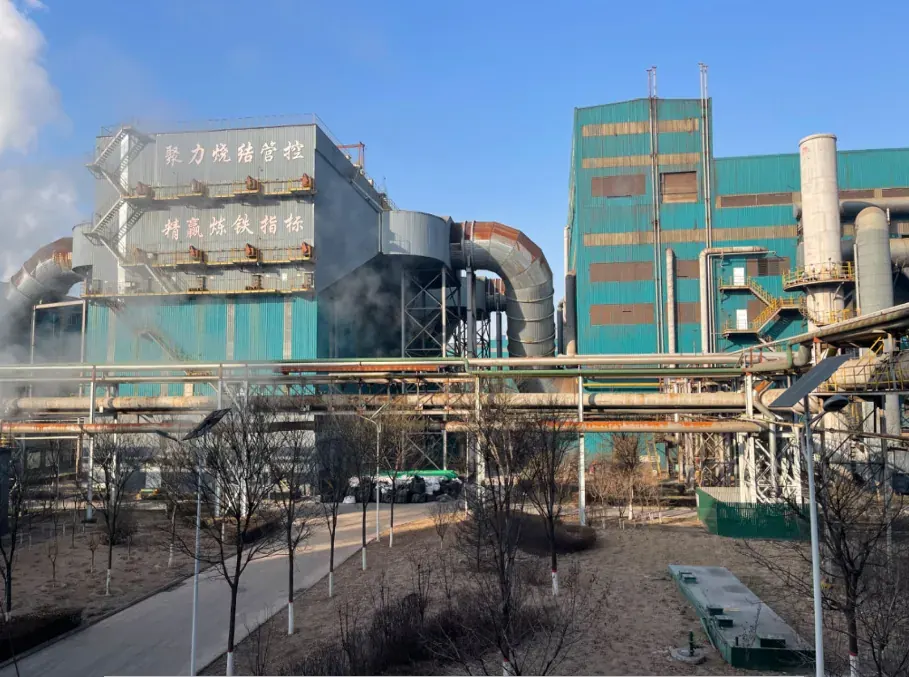 Replacing Star-Delta Starting on Blast Furnace Conveyors at Shanxi Jinnan Iron & SteelShanxi, China · 2025-03-29Star-delta starting cut the inrush but left the motors running at fixed mains frequency and voltage. Replacing it with drives cut the measured consumption of a 160 kW conveyor by around 200 kWh a day.
Related downloads
Manuals, brochures and selection guides for the series recommended above are in the download library.
Other industries
 Mining & Mineral ProcessingHoists, conveyors, mills and dewatering on a mine site
 Cranes & HoistingHoist, trolley and travel motions on cranes and lifts
 Oil & Gas ExtractionPumping units, linear motors and field power
 Petrochemical & ChemicalReactors, agitators, decanters and transfer pumps
 Fluid Power & WaterSupply, drainage, treatment and industrial fluid systems
 HVAC & Temperature ControlChillers, cooling towers, air handling and district systems