
Project location: Chemical plant, xanthan gum extraction · By MorZan
Direct-Drive Retrofitting Xanthan Gum Fermentation Tanks: Gearbox Out, 155 rpm In
- Plant / customer:
- Xanthan gum producer
- Published:
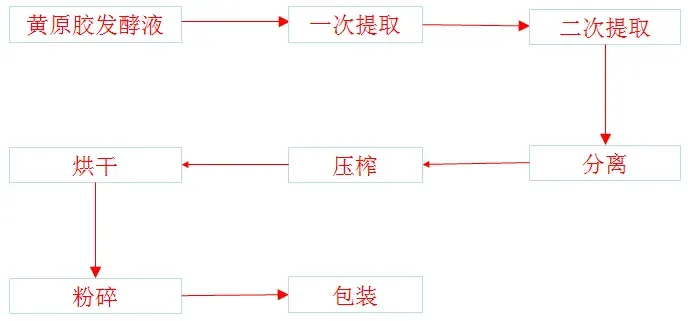
Xanthan gum is produced by fermentation, and the extraction stage stirs the broth in a tank where faster agitation means higher yield. The existing drive train was conventional: a 1,500 rpm induction motor, controlled by a standard drive, turning the impeller through a gearbox reduced to 150 rpm. Every rpm added at the impeller had to be paid for through a gear stage.
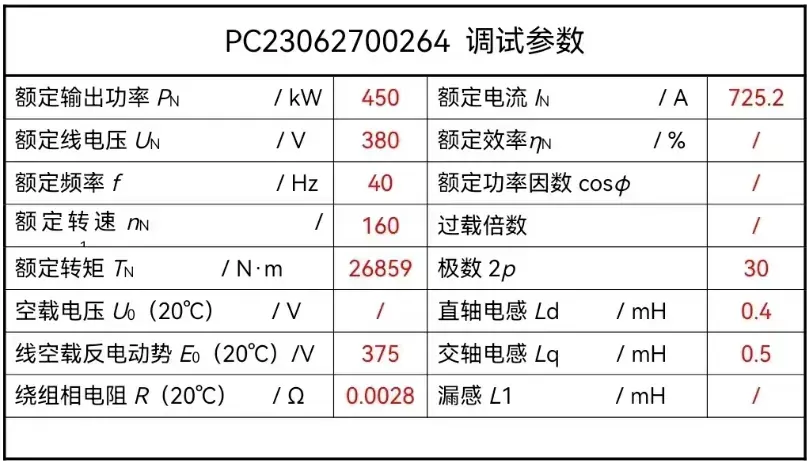
The retrofit replaced the pair with a permanent-magnet synchronous motor rated 160 rpm, direct-coupled to the impeller. The gearbox disappears, along with its losses and its maintenance, and the drive selected for the duty was a YDS8500 T4-E002 sized from the motor parameters.
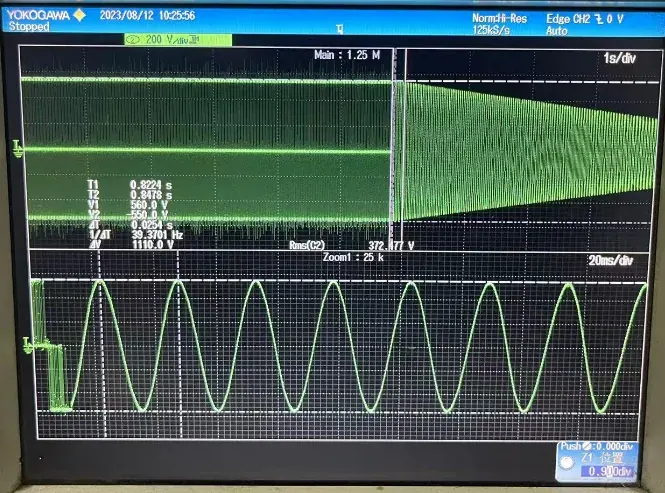
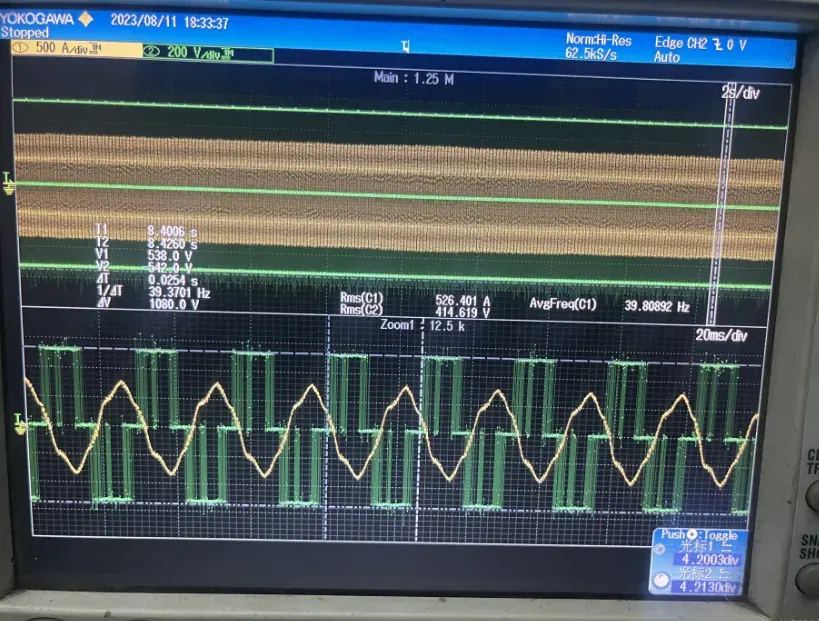
Commissioning followed the usual safe sequence — motor parameters learned with no load on the shaft, coupling connected and load applied afterwards — but it also produced a useful diagnostic. Under heavy load the motor would not reach rated speed, and enabling field weakening barely helped. Measurement explained why: the motor's actual back-EMF was 406 V, well above the roughly 90 % of rated voltage that a correctly specified machine should show. At a supply of 395 V, the drive's DC bus sagged from about 550 V to 510 V under load, so as the motor approached rated speed the drive's output voltage fell below the back-EMF and the motor lost control.
The remedy is worth recording as it applies to any retrofit where the driven machine's existing motor is re-used. There were two options: insert a transformer ahead of the drive to raise its input voltage, or fit a four-quadrant drive that actively regulates the DC bus instead of letting it follow the supply. The site accepted a practical compromise for the moment — capping production speed at 155 rpm — which is still above the 150 rpm the tank ran at before, so output rose even with the limitation in place.
The tank runs a 72-hour batch recipe: 80 rpm for the first 24 hours, 100 rpm for the second, and 155 rpm for the third, which is why variable speed matters more here than in a constant-duty mixer. To quantify the benefit the plant fitted smart meters on both the converted tank and an unconverted one. Over a full production cycle the converted tank used 2,400 kWh less — about 800 kWh a day. With 30 identical tanks on site, converting them all would be worth several million yuan a year in avoided electricity at industrial tariff, which is why the site is planning to proceed tank by tank.
Project data
- Drive
- YDS8500 T4-E002
- Change
- 1,500 rpm induction motor + gearbox → 160 rpm PMSM direct drive
- Recipe
- 72 h cycle: 80 rpm / 100 rpm / 155 rpm, 24 h each
- Measured saving
- 2,400 kWh per 72 h cycle against an unconverted tank
Project photographs
Industry guide for this application
This project sits in the Petrochemical & Chemical section. The guide covers the duty profile, the machinery and the selection rules for that industry.
Read the Petrochemical & Chemical guide