

Industry selection guide
VFD for Energy Saving & Retrofit
Most industrial energy is spent moving fluids at a speed nobody chose. This guide covers how to find, quantify and deliver a variable frequency drive (VFD) retrofit that pays for itself on measured savings.
How this industry uses a drive
The retrofit business has one characteristic that separates it from new-build work: the saving has to be measured, because it is the only thing being sold. That changes the engineering. A new installation is judged against a specification; a retrofit is judged against a baseline recorded before anything was touched, and if that baseline is not taken, the saving becomes a matter of opinion exactly when it needs to be a number.
The opportunities themselves are well understood and remarkably consistent across industries. Throttled pumps, dampers on fans, relief valves on hydraulic units, compressors running unloaded half the time, cooling systems at fixed flow all year. Each is a case where an operator is deliberately destroying energy to control something, because until recently destruction was cheaper than control. The drive makes control cheap, and the size of the prize is set by how much energy the destruction was consuming.

Taking a baseline that survives scrutiny
A credible baseline is measured, not estimated from nameplate data. That means recording the actual power drawn by the machine over a representative period, including the operating pattern — how often it starts, how long it runs, how the load varies within a shift, a week, a season. A drive with a built-in energy meter or a portable power analyser can do this; the difference between the two is mostly the cost of the visit.
The measurement has to cover the whole system, not just the motor. A pump retrofit that saves 30 % at the motor but requires an additional 8 % of pump power because the control valve has been opened fully is a 22 % saving, and presenting it as 30 % is the fastest way to lose a client's confidence on the next project. Differential pressure, flow and temperature at the process are part of the baseline, not optional extras.
Finally, the baseline has to be normalised. Production volume, ambient temperature and product mix all move the energy bill, and a saving measured in a month when the plant ran at 60 % loading proves nothing. Recording the variables alongside the power — even approximately — is what allows the result to be defended when the finance team asks why the bill did not fall as much as the calculation predicted.
Delivering the saving, not just the hardware
Most retrofit projects that fail to deliver their saving fail for the same reasons, and none of them is the drive. The control loop is left on default and hunts, so the plant runs at a higher average output than it needs. The minimum speed is left at zero, so the pump runs in a region where it is inefficient and the motor is unprotected. The valve that used to throttle is left in place and partly closed, so the drive is fighting a restriction. Or the operators, who were not consulted, run the plant the old way.
Avoiding these is a commissioning discipline rather than a technical one. Set the pressure or flow loop against the real process, with the real sensor, before leaving site. Set a minimum speed from the machine's own requirement, and a maximum from the process's. Remove or lock open the throttling device so the energy cannot be destroyed twice. And leave the operators with a written note of what the new setpoints are and why, because a plant that is being operated by people who do not believe in it will drift back to its old settings within a season.
Verification should be planned at the same time as the installation. The same instruments used for the baseline should be used for the verification, on a comparable production pattern, and the result should be presented against the baseline rather than against a theoretical figure. Where the client wants a contractual saving, this is also the mechanism that makes the contract enforceable.
Where the big savings actually are
Fan and pump systems dominate, and within them the savings are concentrated in the machines that run continuously against a variable demand. A cooling water circuit sized for August that runs at fixed flow all year is the archetype: the drive is not saving energy on the coldest day, it is saving energy on every day the plant is not at design load, which is most of them.
Hydraulic power units are the second family, and their saving has a different character. A constant-speed pump on a relief valve wastes energy continuously, and the waste appears as heat in the oil, which the cooler then has to remove. Converting it reduces both the electricity and the cooling load, and on a unit where oil temperature was the limiting factor it can also raise the useful duty of the machine.
The third family is the least glamorous and often the largest: compressed air. A compressor that unloads rather than stopping still consumes a large fraction of its full-load power while producing nothing, and a system with a leaky distribution network spends much of its life in exactly that state. Controlling the compressor on pressure with a drive, and fixing the leaks, usually beats every other measure on site in both payback and certainty.
Machinery typically driven
- Cooling-water and chilled-water pumps
- Cooling tower and process fans
- Hydraulic power units and press pumps
- Screw air compressors and blowers
- Pulping, mixing and agitator drives
- Centrifuges and separation equipment
- Condensate and pressure-reduction systems
- Process lines converted from fixed speed
Selection rules to apply
- Measure the existing power and the process variables before quoting a percentage; estimate only when a measurement is genuinely impossible, and say so.
- Report savings at the system boundary, including any change in the process-side demand.
- Budget commissioning time for the control loop in the quotation — it is the part that delivers the saving.
- Remove or lock open the throttling device as part of the scope of supply.
- Write the new setpoints down for the operators and explain why; treat this as a deliverable, not a courtesy.
- Plan verification with the same instruments and a comparable production pattern before the work starts.
Series to start from
Confirm the rated current against your motor's full-load current before fixing the model; the frame size follows the overload the machine needs, not the motor nameplate alone.
- YD580
- YD580E
- YDS8000
- YD5900
- YD3000N
Delivered projects in this industry
4 project records from this industry, with the plant, the motor and the measured result.
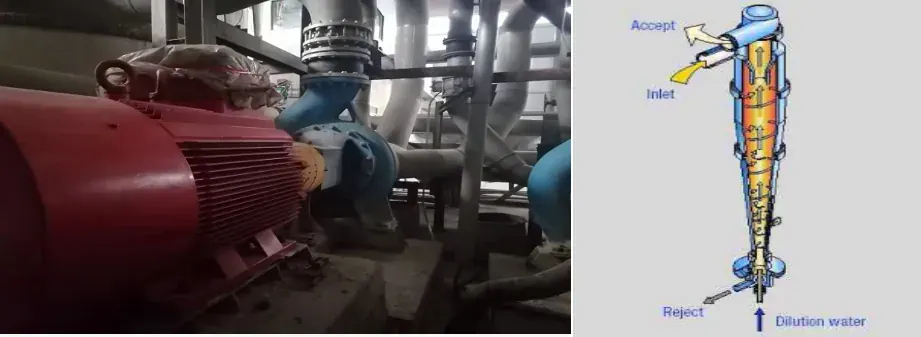 Stock Preparation Retrofit at a Corrugated Paper Mill: PMSM Feed Pumps Cut 40 kWCorrugated base paper mill, China · 2025-03-14Two stock-preparation feed pumps on a high-speed paper machine moved from induction motors to permanent-magnet machines. Supply current on the cleaner pump fell from 730 A to 650 A — about 40 kW, or 192,000 kWh a year.
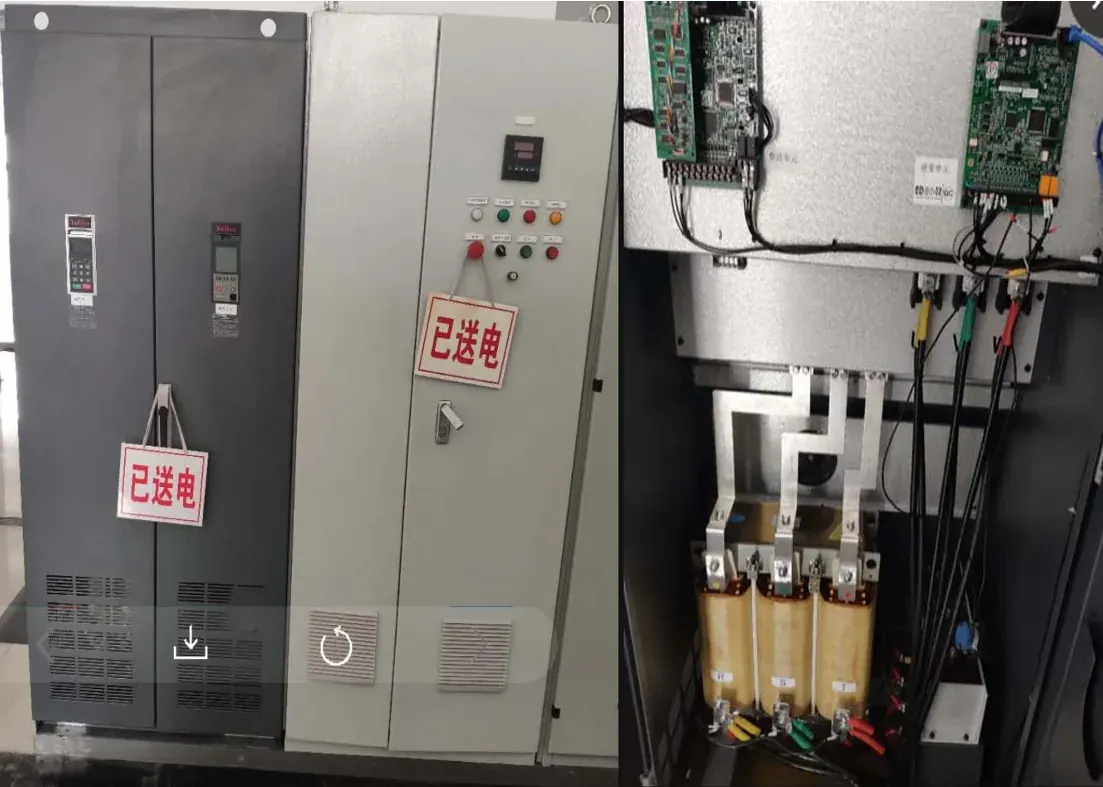 Generating from Condensate Pressure at a Fertiliser Plant: Four-Quadrant Drive Returns 80 kW to the GridXinxiang, Henan, China · 2025-03-29Steam condensate leaving a fertiliser plant still carried usable pressure. A turbine impeller coupled to a permanent-magnet motor, run by a 132 kW four-quadrant drive, now exports 80–90 kW back to the grid.
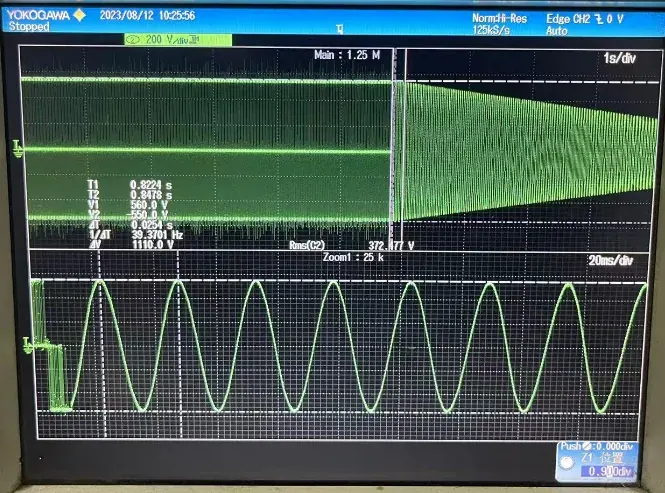 Direct-Drive Retrofitting Xanthan Gum Fermentation Tanks: Gearbox Out, 155 rpm InChemical plant, xanthan gum extraction · 2025-08-27A xanthan gum tank stirred at 150 rpm through a gearbox now runs a 160 rpm permanent-magnet motor direct. Production went up, and a metered comparison against a neighbouring tank showed 2,400 kWh saved per 72-hour cycle.
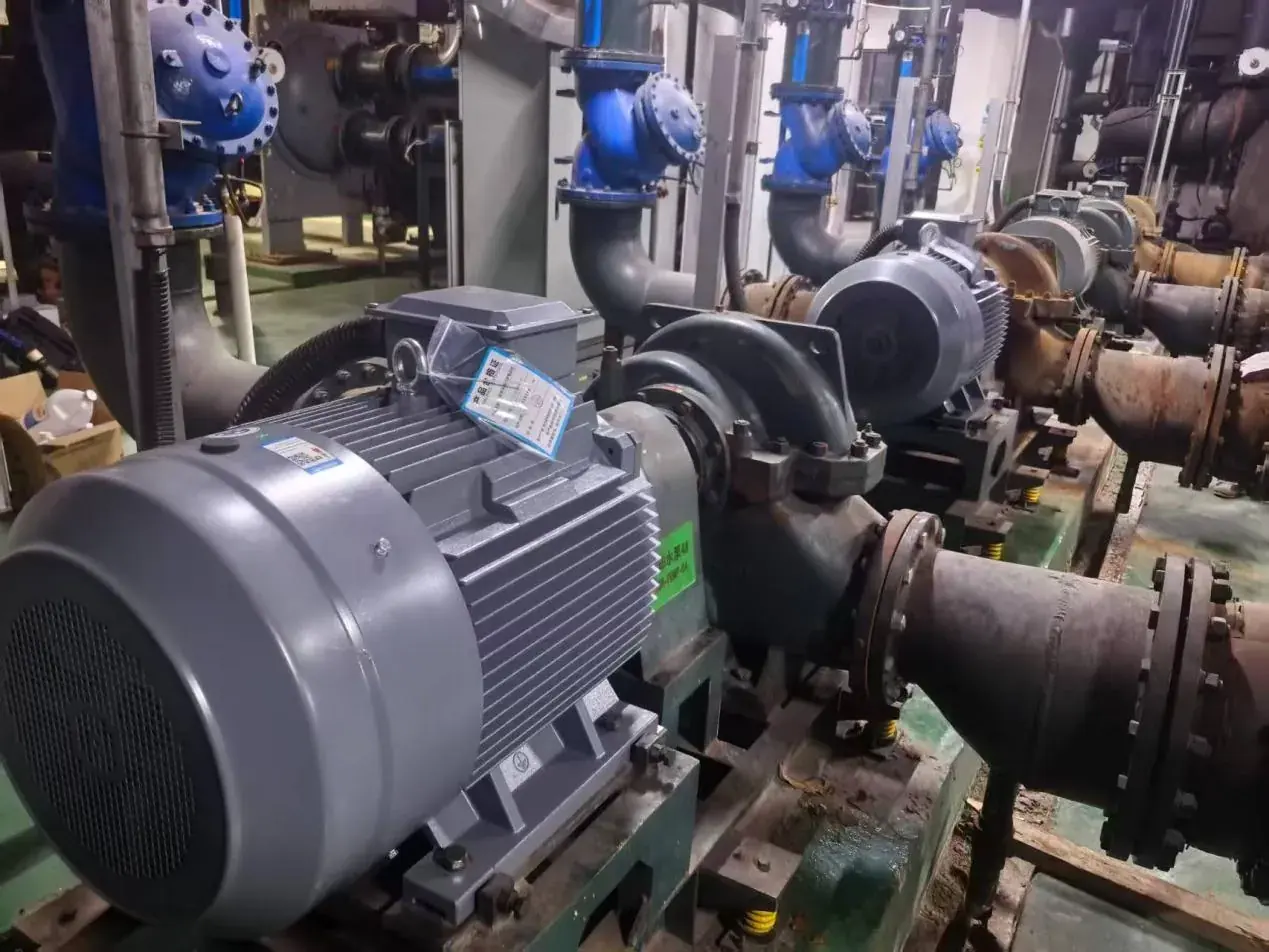 Cooling Water Pump Retrofit with a Permanent-Magnet Motor in ZhangjiagangZhangjiagang, Suzhou, China · 2026-01-16A cooling water pump driving an industrial chiller was converted to a 75 kW permanent-magnet motor on a 150 A YZJ580E drive, with local/remote control from the panel door and run and fault signals back to the plant PLC.
Related downloads
Manuals, brochures and selection guides for the series recommended above are in the download library.
Other industries
 Mining & Mineral ProcessingHoists, conveyors, mills and dewatering on a mine site
 Steelmaking & MetallurgyRolling mills, converters, conveyors and hydraulic power units
 Cranes & HoistingHoist, trolley and travel motions on cranes and lifts
 Oil & Gas ExtractionPumping units, linear motors and field power
 Petrochemical & ChemicalReactors, agitators, decanters and transfer pumps
 Fluid Power & WaterSupply, drainage, treatment and industrial fluid systems